


Teaching Support and Classroom Requirements
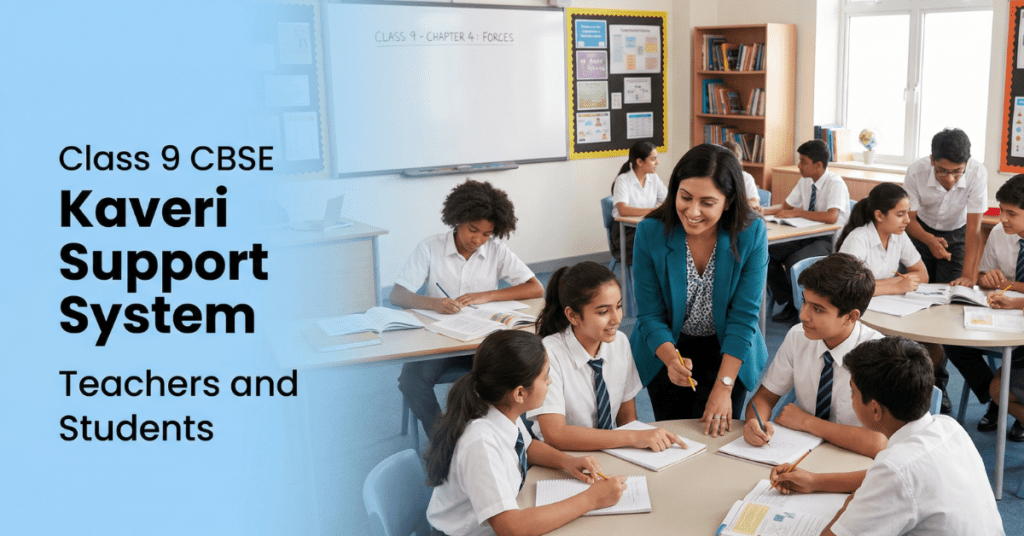
What do teachers and students need? To make a book like Kaveri work well, both teachers and students would need precise scaffolding, sufficient time, and the right classroom conditions. The textbook expects discussion, reflection, inference, writing in varied forms, pair work, group work, projects, and learning beyond the text. The syllabus is also framed with expectations of competency-based teaching, diverse assessments, and attention to student diversity. That means the book cannot be taught effectively through explanation alone. This is where Method Learners comes in.
Pedagogic Support and Teacher Training
Teachers would need:
● Pedagogic support and training in discussion-based teaching, close reading, teaching poetry, guiding debates, and helping students move from literal understanding to analysis and reflection. The syllabus and textbook must equip students to reason, interpret, and respond critically, not just reproduce answers.
Mixed-Ability Classrooms and Student Diversity
● Support for mixed-ability classrooms, especially strategies for multilingual learners, hesitant speakers, and students with different reading levels. The syllabus explicitly says assessment and pedagogy should accommodate student diversity.
Planning Support and Curriculum Management
● Planning support, because the book includes prose, poetry, speaking, listening, writing, projects, and community-linked tasks. Teachers need help deciding what to do in depth, what to scaffold, and what to adapt when time is short.
Assessment Tools and Evaluation Methods
● Assessment tools such as rubrics, sample responses, portfolio formats, and feedback guides. The syllabus recommends observation, projects, portfolios, oral work, open-book tests, and constructive feedback, so teachers need practical ways to assess these fairly.
Resource Support and Learning Materials
● Resource support like libraries, supplementary reading, audio materials, digital access, and time to use QR-based enrichment meaningfully. The textbook itself points to books, media, digital archives, libraries, and community knowledge.
Student Learning Support and Scaffolding
Students would need:
● Vocabulary and reading scaffolds, because many tasks ask them to infer, analyse, compare, and express opinions. Students will need guided reading, pre-teaching of key words, and examples of strong responses.
Speaking Confidence and Classroom Environment
● A safe, encouraging speaking environment so they can participate in discussions, interviews, presentations, and debates without fear of being judged for mistakes. The curricular goals place strong emphasis on oral communication and reasoning.
Writing Practice and Skill Development
● Structured practice in writing, especially for essays, letters, reflections, creative writing, and analytical responses. Students need models, guided drafting, and feedback rather than only scores.
Independent Learning and Self Assessment
● Support for independent learning, since the book encourages self and peer assessment, reflection, and learning beyond the text. Adolescents may be capable of this, but many will still need teacher modelling and guidance.
Reading Culture and Extended Learning
● Access to reading culture beyond the classroom through school libraries, home support, and chances to read additional texts. It is necessary to sustain reading growth beyond the prescribed lesson.
Integrated Support for Teachers and Students
We believe that Method Learners provide vital support to both groups of
stakeholders: teachers need professional and material support to mediate the book well, and students need scaffolding and confidence-building to participate fully. Without that, the textbook may become too difficult or rushed; With that support, it can become a very rich language-learning experience.