
Learner Centred Design and Language Development
A Note on Kaveri
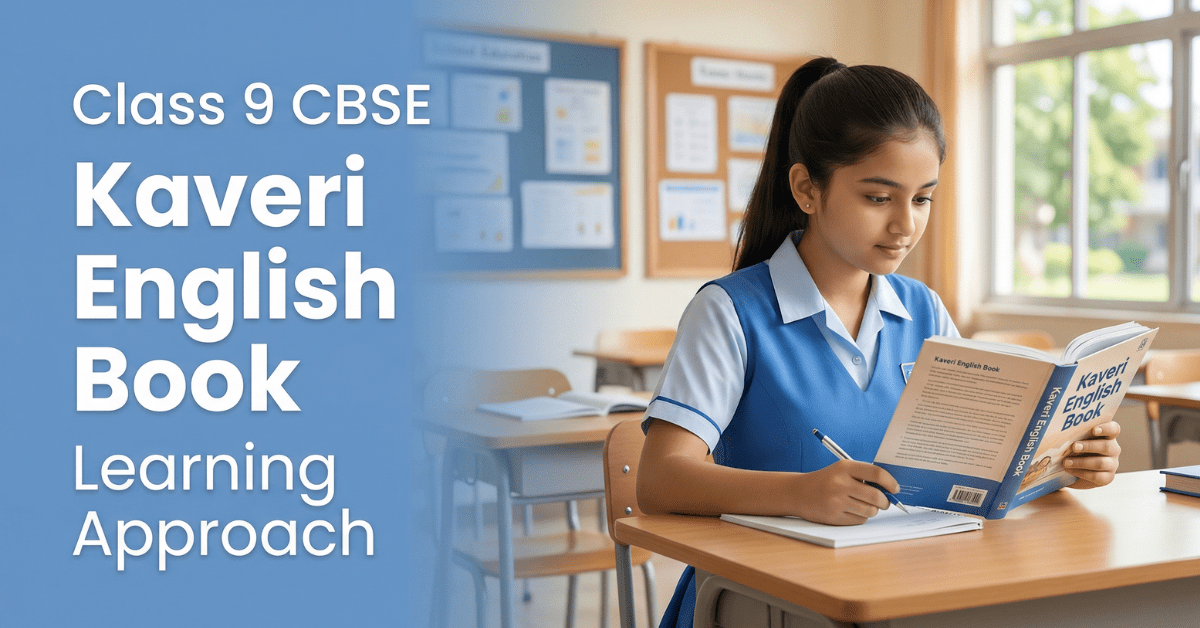
This textbook appears to be thoughtfully designed, learner-centred, and academically well-grounded. It does not treat English as only a subject intended for learning grammar and tackling exams; instead, it presents language as a means of communication, reflection, creativity, and personal growth. The emphasis on discussions, interviews, speeches, writing tasks, critical reflection, and aesthetic appreciation shows that the book aims to help students develop into confident users of language, not passive readers of lessons.
Real Life Learning and Value-Based Education
What is to be especially appreciated is the way the book connects English learning with real life, values, and social awareness. Themes such as family relationships, dignity of labour, inclusion, resilience, music, heritage, and Indian knowledge systems can help adolescents become both emotionally and intellectually engaged
Structured Learning and Pedagogical Approach
The structure of each unit—beginning with reflection, moving through comprehension and vocabulary in context, and then extending into speaking, listening, and writing exercises, and finally into learning beyond the text—is pedagogically very sound. It enables active participation, pair work, group work, and independent thinking. That is a major strength: structured scaffolding provides structured support to students so that they can progressively build understanding and independence in learning.
Communication, Reasoning, and Literature Integration
From an instructional point of view, the strongest feature is that the book supports the three curricular goals in an integrated way:
- communication,
- reasoning, and
- appreciation of literature.
This is exactly what good literature and language teaching should do. Students are not just asked to answer questions on a literary text; they are invited to infer and analyse it, then expand their engagement by responding personally, and through it, express themselves in multiple forms.
Challenges in Teaching and Classroom Adaptation
At the same time, one professional caution should be shared: the textbook is ambitious. To teach it well, the teacher must actively mediate the lessons, scaffold vocabulary, support mixed-ability learners, and create a safe classroom where students feel comfortable speaking and sharing opinions. Some activities may be suitable for well-supported classrooms as they are, but in exam-driven or time-constrained settings, teachers may need to adapt tasks carefully. The learning tools and materials from Method Learners can be used to build upon these tasks, suturing gaps in them into pragmatic, yet comprehensive processes.