
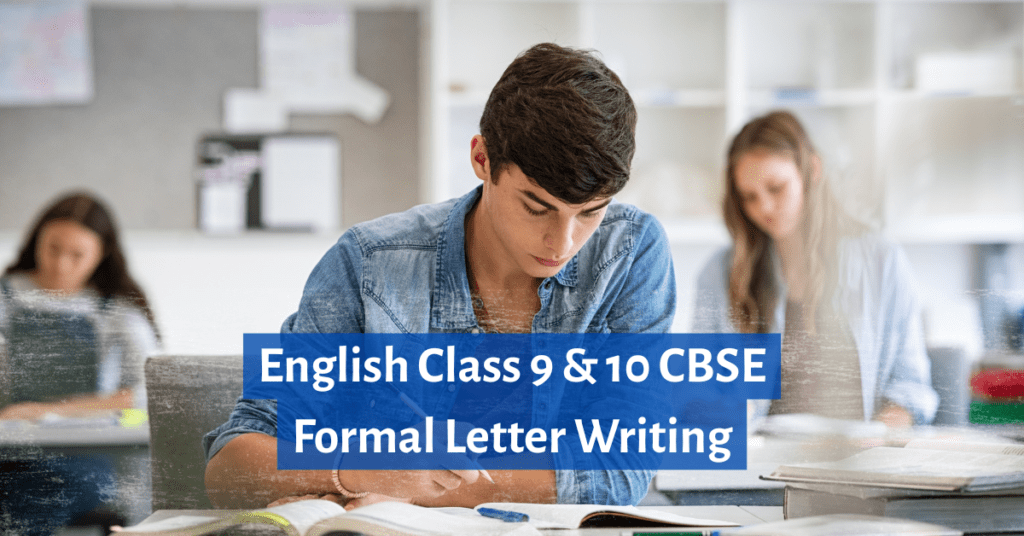



Formal Letter Writing for Class 9 and 10 CBSE
Formal letter writing is a key part of the CBSE English exam for Class 9 and Class 10. Students need to follow a fixed format and write clear answers within the word limit. Many students lose marks because they miss the structure or use an informal tone.
This guide explains how to write formal letters step by step. It also includes a complete template that students can follow during exams.
Types of Formal Letters
- Letter of Complaint for poor service, faulty product, civic issue
- Letter of Request for permission, facilities, support, or action
- Letter to the Editor for public issues, awareness, and suggestions
- Application Letter for leave, job or internship, admission, or scholarship
- Enquiry Letter for fees, courses, availability, booking, and details
Standard Format of a Formal Letter
Elements or Parts
Sender’s address
Date
Receiver’s address
Salutation
Subject
Concluding or Closing line
Body
Sender’s signature
Name of the Sender
Parts of a Formal Letter Explained
- Sender’s Address
Written at the top left. It tells the reader where the letter is coming from. - Date
Written below the sender’s address in a clear format, such as 18 February 2026. - Receiver’s Address
Name or designation and full address of the person or institution you are writing to. - Subject Line
A brief line stating the purpose of the letter. It must be precise.
Example
Subject: Complaint regarding irregular water supply in Sector 12 - Salutation
Common forms
Madam or Sir
Respected Madam or Sir - Body of the Letter
The body is typically written in three sections
Paragraph 1 Introduction
State who you are and why you are writing.
Paragraphs 2 to 4 Body or Details
Give relevant facts such as what happened, when, where, and how it affects people.
Paragraph 5 Request and Closing
State what you want the authority to do and end politely.
- Complimentary Close
Sincerely
Faithfully
Regards
Respectfully - Signature Line
Your name, designation, class or section, roll number if needed, and contact details if relevant
Formal Letter Template
Fill in the blanks as required
Sender’s Address
Date
Receiver’s Address
Subject
Salutation, Madam or Sir
Paragraph 1 Purpose
I am writing to ———————————–
OR
I wish to bring to your notice ———————————–
OR
I request you to kindly ———————————–
Paragraph 2 Details
The matter concerns ————————————————————————————–
It has caused ————————————————————————————————
Further ——————————————————————————————————-
Include facts such as date, place, amount, duration, effects
Paragraph 3 Action or Request
I request you to kindly ———————————————————————————–
I would appreciate it if ————————————————————————————
I hope the necessary action will be taken at the earliest
Polite Closing
Thanking you
Yours faithfully
Name
Class or Contact if needed
Language Features of a Formal Letter
- A formal letter should use
- Polite request forms such as I request you to, I would be grateful if, Kindly
- Objective tone that focuses on facts instead of emotion
- Clear structure with short paragraphs and no extra detail
- Formal vocabulary without slang, casual phrases, contractions, or abbreviations
How to Score Full Marks in Formal Letter Writing
Students should focus on the format first. A correct format ensures that no basic marks are lost. Then focus on the content. Write clear points and avoid unnecessary explanation.
Keep sentences short and direct. Use formal language and avoid personal opinions unless required.
Who Should Use This Guide
This guide is useful for Class 9 and Class 10 CBSE students preparing for school exams and board exams. It also helps students who want a clear structure to improve their writing answers.
Frequently Asked Questions
What is the correct format for a formal letter in CBSE Class 10
The format includes sender address, date, receiver address, subject, salutation, body, closing, and signature.
How many paragraphs should a formal letter have
A formal letter usually has three to five paragraphs based on the content.
Can I use informal language in a formal letter
No. You should always use formal and polite language.
Is format important in CBSE letter writing
Yes. Format carries marks, so students must follow it correctly.