
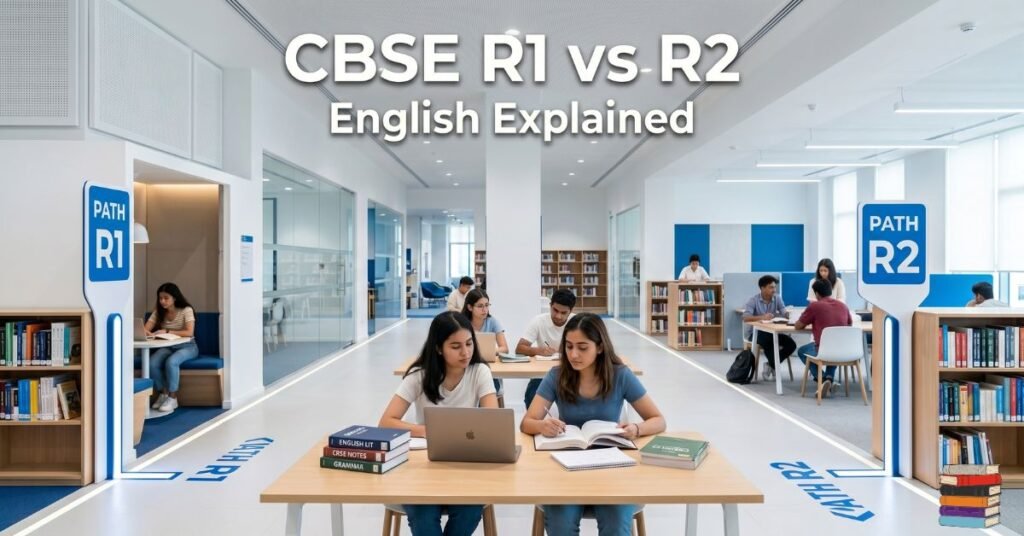



The distinction between R1 and R2 in the CBSE Class IX English curriculum is subtle in structure but significant in pedagogical intent and classroom transaction. Both are anchored in a common competency framework, reflecting the NCF-SE 2023 vision of equitable and flexible language learning.
However, a closer reading reveals that R1 is positioned as a more expansive and culturally rooted engagement with language, while R2 is relatively streamlined, with a stronger focus on functional proficiency and accessibility.
At the curricular level, R1 places a distinct emphasis on cultural and linguistic awareness through an additional goal (CG-4) that foregrounds appreciation of Indian languages, multilingualism, and the role of language in identity formation.
This is absent in R2, indicating that R1 expects a deeper engagement with language as a socio-cultural construct, beyond its communicative function. In contrast, R2 limits itself to three curricular goals, prioritising communication, reasoning, and literary appreciation in a more contained manner. This suggests that R2 may be designed for contexts where cognitive load or exposure needs to be moderated.
The sequencing of competencies also reflects a pedagogic shift. In R1, literary appreciation (CG-2) precedes reasoning (CG-3), whereas in R2, reasoning is foregrounded before literary aesthetics. This reordering is not merely structural; it signals different entry points into language learning.
R1 encourages students to first engage with literature deeply and then move towards critical argumentation, while R2 adopts a more utilitarian progression, building reasoning skills earlier to support comprehension and expression.
Assessment design further reinforces these differences. While the overall weightage remains identical, R1 incorporates more open-ended and expressive writing tasks, such as descriptive and narrative essays of longer length, and includes discursive reading passages.
R2, on the other hand, introduces more guided formats like posters, speech writing based on cues, and shorter narrative compositions. The grammar section in R2 also includes more scaffolded tasks like paragraph completion, indicating a need for structured support.
In literature assessment, R2 allocates higher weightage to extract-based questions, which are typically more text-bound and objective, whereas R1 balances this with broader constructed responses, allowing for interpretative depth. This again reflects R1’s orientation towards analytical and expressive autonomy, while R2 leans towards consolidation of comprehension skills.
In practice, these differences call for differentiated pedagogy. R1 classrooms can sustain exploratory discussions, comparative literary analysis, and culturally responsive teaching. R2 classrooms, while equally meaningful, may require more scaffolding, guided practice, and structured tasks to build confidence and competence.
Ultimately, the R1–R2 distinction is not hierarchical but responsive. It recognises the diversity of learners and contexts, offering pathways that are aligned in goals but varied in depth, complexity, and pace.
At Method Learners, we see the CBSE’s latest English curriculum as a practical opportunity for schools to strengthen classroom processes, streamline planning, and improve learning outcomes—especially in diverse, mixed-ability settings.
To support departments in this transition, we have developed a comprehensive, classroom-ready ecosystem for both R1 and R2 pathways. This includes:
- Structured teaching plans (day-wise, outcome-linked)
- Differentiated study materials and worksheets
- Assessment-ready question papers aligned with CBSE patterns
- Classroom management supports for handling varied learner levels
All our resources are fully aligned with CBSE guidelines and grounded in the principles of NCF-SE 2023, ensuring a balance between competency development, assessment readiness, and practical classroom feasibility.
For schools seeking tighter academic control and consistency, we also design:
- Customised midterm test papers, based on actual syllabus coverage
- Institution-specific assessment sets (printed and ready to administer)
- Flexible formats to match your internal timelines and evaluation needs
Our aim is simple: to reduce teacher load while improving instructional clarity, pacing, and student engagement—whether you are running separate R1/R2 sections or managing differentiation within the same classroom.
What do the differences in R1 and R2 CBSE English curriculum 2026-27 mean for the students?
R1 vs R2 CBSE Question Paper Pattern
For samples, consultations, or customised support, write to us at methodlearners@gmail.com You can also request free sample materials to evaluate fit before adoption.